HISTORY
A funny thing happens in a place like Oxford. The past, it seems, stands still. The buildings of its skyline were built so long ago that they never seem to have been built at all, but rather form a mountain range of unlit gothic caves, crocketed spire peaks and ranks of roosting gargoyles, beneath which sprawls a subterranean warren of quads and colleges – inhabited of course, by undergrads, indistinguishable from the average denizen of the Misty Mountains.
It’s easy to imagine that, in a place so rich with history, understanding it would be like breathing, yet it can also be like the air: as invisible as it is ubiquitous. It is remarkable how a child can take this place for granted. As kind as it is of the past to stand still and give us all a chance to take a proper look, you quickly forget that it was ever moving to begin with; the five centuries and change since Christ Church’s construction soon becomes another number. Six lifetimes thereabouts – this is a much more intuitive way of looking at it. A lot can happen in one lifetime, let alone a half-dozen, and yet it still feels oddly fleeting that only six lives would fit in half of a millennium.
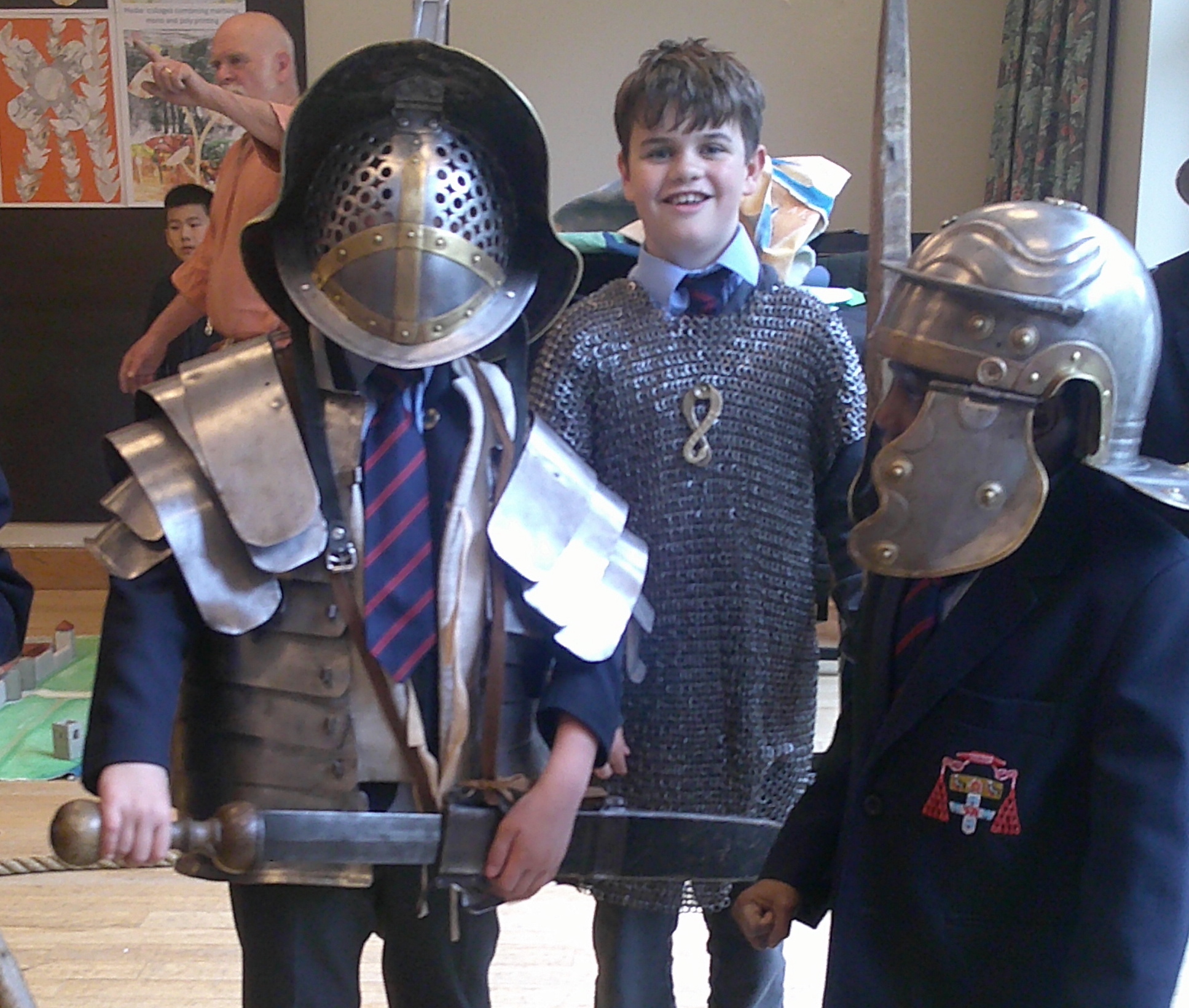
How at CCCS do we convey this contrast? How do we teach the pupils that history was once a dynamic world far apart from ours, inhabited by lives as human as yours or mine, and yet it is also set in limestone all around us? How do we show that only from this oxymoron was our modern world born? Firstly, we use the resources which we are lucky to have upon our doorstep. Oxford’s architectural history is only static if you don’t have someone to tell the stories behind it.
The wealth of history available outside the curriculum is only half the story though. When creating our curriculum, the challenge is to create a clear narrative; at the heart of a child’s enjoyment of history is the storytelling. To this end, the Prep School begins its study in Stone Age Britain. After a term’s detour through Ancient Egypt – a period of beautiful and mysterious artefacts that lends itself perfectly to tactile exploration by those just beginning to approach history as an academic subject – the story follows Britain’s succession of invaders: Celts, Romans (preceded by a module on the Ancient Greeks as Roman culture wouldn’t make sense without it), Saxons, Vikings, and of course the Normans. The older boys learn about the High Middle Ages, into the Early Modern Period. Natural opportunities to look abroad are found throughout, whether it’s the Crusades, the Age of Exploration, or the British Empire. By the time they leave Form 8, the hope is that the boys will be able to draw a coherent line from the Stone Age into the time periods they will be studying in Year 9.
The teaching of History at CCCS encourages independent learning and an open-minded, analytical approach to people and events which might help with the seeking of solutions to the challenges of our own lives and the development of an empathetic attitude to the lives and beliefs of others.
Education influences and reflects the values of society, and the kind of society we want to be. In studying History pupils discover these commonly held values, beliefs, ways of ordering our daily lives and the institutions which help us to move forward in a meaningful way. We hope that all pupils may come to love exploring the past to inform the present and the future.