The Life of a Cathedral Chorister

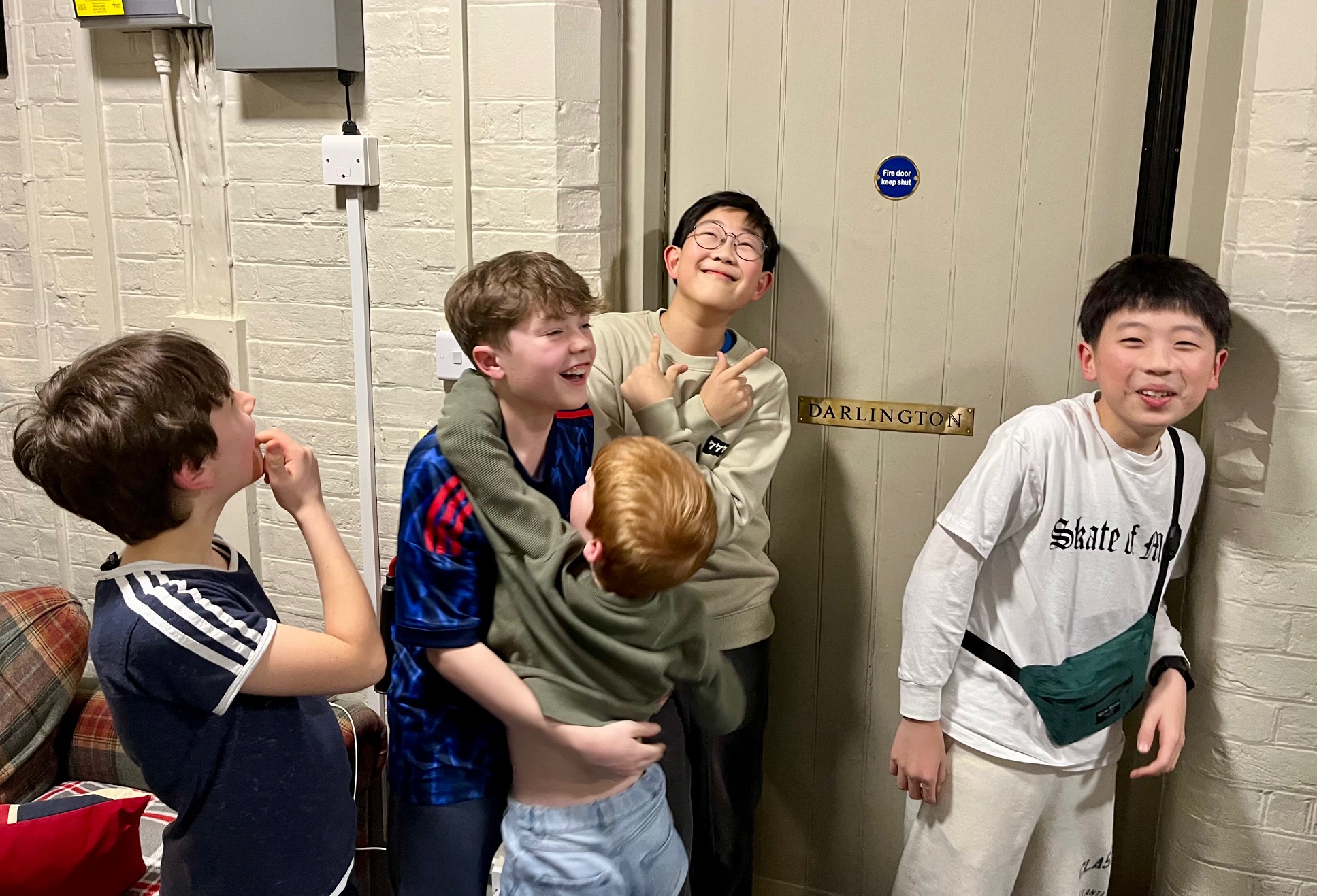
To wander into the choristers’ Song Room at Christ Church is to encounter a pleasing anachronism: small boys in immaculate new cassocks, hurrying with a seriousness that would shame most cabinet ministers, intent on plainsong more than punctuality. One expects a heady mixture of incense and discipline, Latin and lashings of stoicism. What one discovers instead is something at once more human and more subversive: a republic of treble voices, sustained by mischief, ambition and a surprisingly robust sense of humour.
I asked several of these young gentlemen what it is like to be a Cathedral Chorister. Their answers, refreshingly unvarnished, offer a corrective to any sepia-tinted illusions about an ecclesiastical childhood.
The best part? Not piety. Not prestige. Not even the architecture. For Henry, it is “making new friends”, a reminder that even beneath the vaulted ceilings of Christ Church, fraternity trumps theology. Harrison concurs, praising “being around other people and composition” which suggests that the true liturgy here is companionship, set occasionally to music. Sergey is more direct: “Singing, especially at big services and concerts.” There speaks a natural performer, already aware that applause is a sacrament in its own right. William, admirably blunt, nominates “music practice” itself – I fully concur with him on this.

And what of their musical devotions? Their playlists range widely! Henry leans toward the lush romanticism of Rachmaninoff; William favours the cool, liturgical wit of Poulenc; Sergey invokes the baroque intricacies of Buxtehude. Harrison stands with the titan Beethoven, while Edward selects MacMillan, whose Catholic modernism does not so much float up to heave but marches up there and bangs authoritatively on the pearly gates. Artie opts for Nico Muhly, proving that the contemporary has not been excommunicated from the choir stalls.
Yet this is a boarding school, and no idyll is complete without its irks and irritations. The most challenging aspect? William recalls simply “starting” – that first wrench from home, a universal pang. Harrison confesses that sharing a dormitory is taxing, “because I’m so messy,” (this is my own postscript to what Harrison told me, but it holds true). Sergey cites simply “gossip,” the eternal vice of cloistered communities but he failed to indicate if his complaint was in terms of too much or too little. Edward points to “Mr Holder’s expectations,” which sounds ominous until one remembers that Mr Holder has the patience of a Saint. Artie, with enviable candour, identifies “sleeping” as a challenge but having sat next to him in many services, I can honestly say that he seems to have no problem in this regard.
In-house enthusiasms are equally telling. Football club vies with piano practice; the IT room competes with bedtime extensions. Henry and Artie admit, with a conspiratorial grin, that “trouble” ranks highly, one feels that Henry’s mentoring has not been lost on Artie. Sergey’s preferred pastime, “scaring Matron,” has the ring of a minor Gothic farce.
As for life beyond the Cathedral, ambition flourishes. Radley and Harrow beckon; Marlborough, St Edward’s, Purcell and Wells hover on the horizon like promised lands. These boys are already plotting their next chapters, their treble lines destined to break but their aspirations unbroken. Thus, the life of a cathedral chorister emerges not as a monastic retreat but as a vigorous apprenticeship in music, camaraderie and endurance. Beneath the surplices beat ordinary, rebellious, ambitious hearts. They sing Buxtehude and Muhly; they endure gossip and dormitories; they dream of Harrow and Radley. And in the echoing spaces of Christ Church, their voices rise, not in sanctimony, but in spirited, occasionally troublesome, entirely human song.
Mr John Robson
Boarding Housemaster