Why We Assess
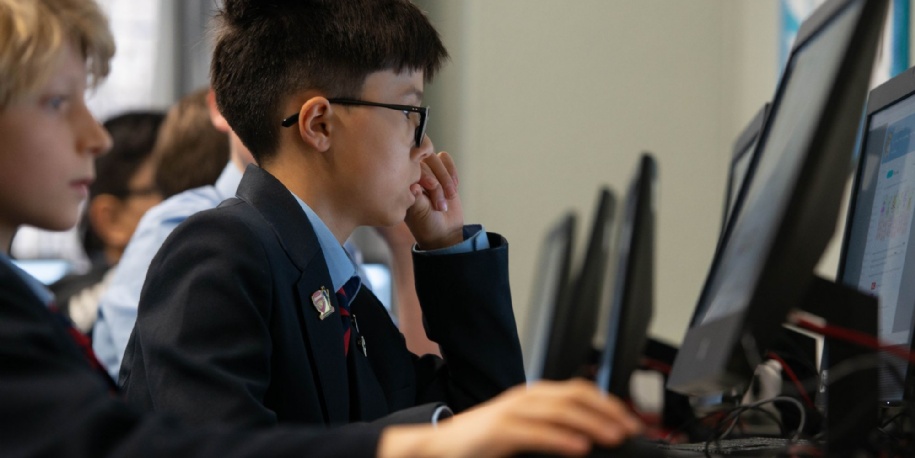
As your child progresses through the school, they will come across different types of assessment. Of course, as we are a selective school, your child will have done an assessment before they joined us – though if they were young when they arrived they may not have realised it! We do this to make sure that all the pupils here will be able to take advantage of what we have to offer.
Assessment has several purposes:
- to find out what level a child is performing at
- to find out how much progress a child is making term-on-term
- for teachers to find out what a class knows, to help them plan the next stage of work
- for me to identify how well our school is doing in comparison with other schools, and to identify which individuals or groups need more support to do well
- to encourage the child to revise what they have learned
- to enable the child to recognise their own achievements to help in choosing the right next school for a child
- to teach the child about revision and how to take exams, in preparation for GCSEs and beyond
Teachers assess all the time, every time they ask questions in the classroom or mark work. This is supported by more formal assessments periodically. In the EYFS this is done through observations. In the Pre-Prep and Forms 3 and 4 the children do written assessments a couple of times a year, and from Form 5 we make “exam week” twice a year feel a bit more formal to encourage the boys to take responsibility for their results.
Periodic assessments are extremely useful for the data they provide, but the risk is that any child may over- or under-perform on a single day. This is particularly risky for the younger children, which is why we only report results formally to parents from Form 5 (though teachers of younger pupils are happy to discuss progress, including test results, with parents at any time). The teachers at CCCS know your children very well, so they are able to understand test results in context.
The main subjects we assess are English and Mathematics, as these are the core subjects which run through the whole of a child’s education. In the EYFS, a wider range of areas of development are assessed equally, and your child’s teacher will be able to explain this to you. In Forms 1 and 2 we assess Phonics, and throughout the school we assess English through Reading, Writing, Spelling, and Grammar/Punctuation/Vocabulary. Mathematics is assessed as both Arithmetic and Mathematical Reasoning. From Form 1 to Form 6 we use standardised tests, so the result is in comparison with the national average. (Comparing with averages within our school would be meaningless as our class sizes are so small, which is why we do not do that). So, a result of 100 means that a child is performing at the national average. Anything between 90 and 110 is “broadly average” and a score outside that means significantly above or below national average. 120 or above is considered very high. Parents often ask me what a test result is “out of”; with standardised testing, this is often an impossible question as there is no maximum or minimum. If you see your child’s result and you are unsure what it means, please talk to their teacher.
From Form 5 we also assess Verbal and Non Verbal Reasoning, through an online test known as CAT-4 and through other standardised Reasoning tests. Reasoning is a skill we teach from Form 4, and it is often used as an indicator of cognitive potential. Most senior schools require some form of Reasoning score as part of their entry process.
The world of education is undecided whether the future of assessment lies on paper or online. At CCCS, we choose paper for the Pre-Prep, because children’s handwriting skills are usually ahead of their keyboard skills at this age. From Form 3 to Form 6 we have just started using online assessments (other than for Writing), to echo the majority of senior school entrance exams. From Form 7 we use paper, in the style of the Common Entrance exams; these are currently on paper because so (at the moment at least) are GCSEs and A-Levels.
Preparing for senior school entrance exams is, of course, an important part of our job as boys move up through the Prep School. Mr Murray and I are experienced at guiding boys and their parents through this process, which we explain to parents in detail at the beginning of Form 5. Most schools assess for Form 9 entry towards the beginning of Form 6, so we need to be ready. Increasingly, schools are assessing online, either using the ISEB Pretest or their own online assessments. We make sure boys are ready for whichever entrance exams they need to take.
Once the entrance exams are over, by mid-Form 6, we are free to assess in a different way. It is at this point that we start encouraging revision and written exams in other subjects: Science, French and Latin. We also do the Independent Project Qualification, a completely different sort of challenge from the ISEB (Independent Schools Examination Board) in which pupils need to carry out their own original research and present their findings, in both Forms 6 and 7. We start assessing in a more senior school style, building up to the ISEB Common Entrance exams (in English, Mathematics, Science, French and Latin) at the end of Form 8. Some schools ask for Common Entrance as part of their entrance process, but regardless of your son’s senior school, we find that Common Entrance is useful as a way to teach the boys self-discipline, revision skills and exam technique before they face more serious exams at their next school.
This has been a very brief tour through the different forms of assessment we use at CCCS. If you have any questions, please feel free to get in touch (fairhurst.a@cccs.org.uk). I look forward to our test weeks and the data they produce; it is one of the most interesting parts of my job to analyse what the data tell us about our school and the children within it, and all the wonderful things they are learning.
Mrs Anna Fairhurst
Deputy Head - Academic