Silent Movie Club
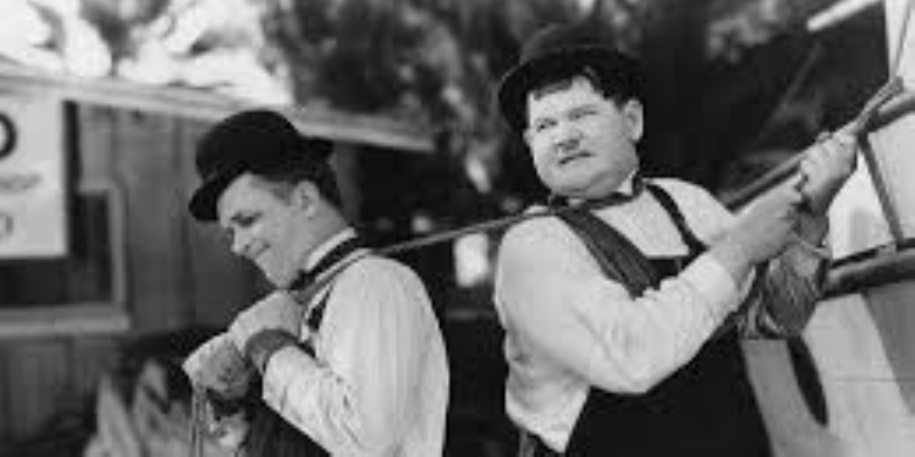
“That’s another fine mess you’ve gotten me into!”
I have always been a fan of the stars of early cinema. They took a brand-new technology and used it to combine what they knew already (in many cases, clowning) with new ideas, creating a whole new genre of creativity. Of course, for the first generation of cinema actors, it was not possible to synchronise pictures with sound – but if you watch their films you really don’t need it. They developed a method of acting in which they communicated everything they wanted to say through tight plotting, gestures and some wonderful facial expressions. There was also the new, and related, profession of being a cinema pianist or organist, who had to improvise music to accompany the film, often with added sound effects (literal “bells and whistles”) stuck to the top of the organ. Some silent movie stars stopped work in the 1930s, when sound arrived, but others kept going – and I love that even into the 1940s, Laurel and Hardy movies don’t really need the dialogue.
The other thing about silent movies is that they had to be short because they could not fit more than about 25 minutes’ worth of film onto a reel. This was the inspiration for my enrichment activity: we can watch a whole movie every week and then have a go at making one. In these early weeks we have been exploring how to use gestures to communicate and make people laugh, and how comic shorts are structured. Over the weeks we will plan, rehearse, perform and film our own short movies in the style of Charlie Chaplin and Buster Keaton; if we have time we can also compose our own music to go with them.
Mrs Anna Fairhurst
Deputy Head - Academic
Silent Movie Club Leader